

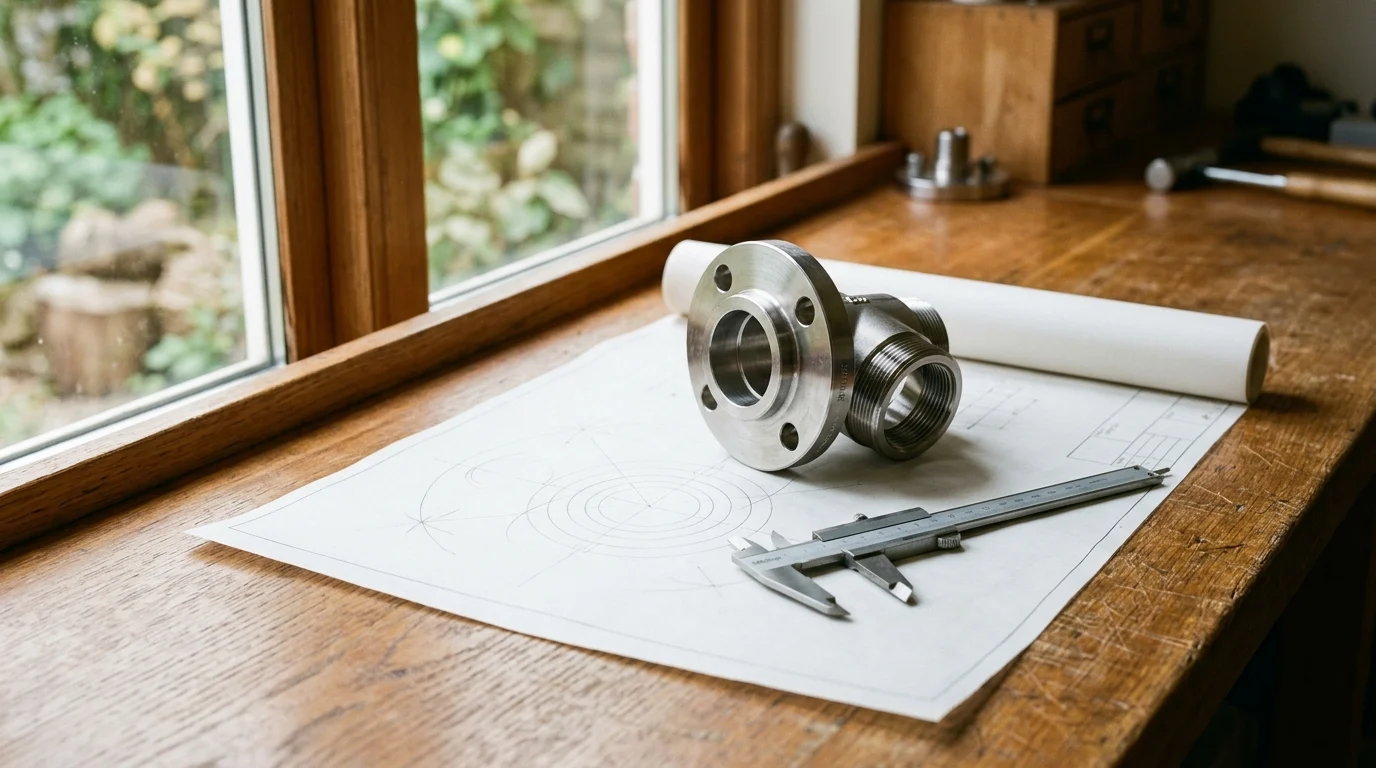
There is a striking contrast emerging across the global and Indian enterprise AI ecosystem.
Recently, we were approached by a large engineering organization with a very specific, high-friction operational challenge: assisting product design engineers in a complex, multi-stage drawing-to-production workflow. Around the same time, I read a high-profile round-table discussion where senior executives spoke about their AI initiatives. Almost everyone had a polished story to tell around conversational bots, automated marketing copy, and exploratory foundation-model pilots.
It made impressive reading, yet it raised a fundamental question: Are we confusing the visibility of AI with the depth of AI adoption?
Headline AI (Superficial Bolt-Ons)
Optimized for keynote demos and internal newsletters. Generic chat interfaces are bolted onto unchanged legacy processes, yielding 5% to 10% individual convenience without moving enterprise P&L.
Operational AI (Workflow Redesign)
Engineered to eliminate multi-day handoffs across engineering, estimation, and manufacturing. Combines Computer Vision, computational geometry, deterministic physics solvers, and domain SLMs.
Why the Hardest AI Problems Are Hidden Inside Engineering Drawings
At first glance, the requirement sounds deceptively simple: “Take a 2D engineering drawing as an input, and assist the designer in producing the required product configuration and cost estimate.”
Anyone who has worked in mechanical engineering, pressure vessels, refractory systems, or capital equipment knows what lies beneath that statement. An engineering drawing is not merely a picture or a PDF page. It is a dense contract of orthogonal projections, geometric tolerances (GD&T), material grades, and embedded physical constraints.
5 Cognitive & Mathematical Layers Inside Every 2D Drawing
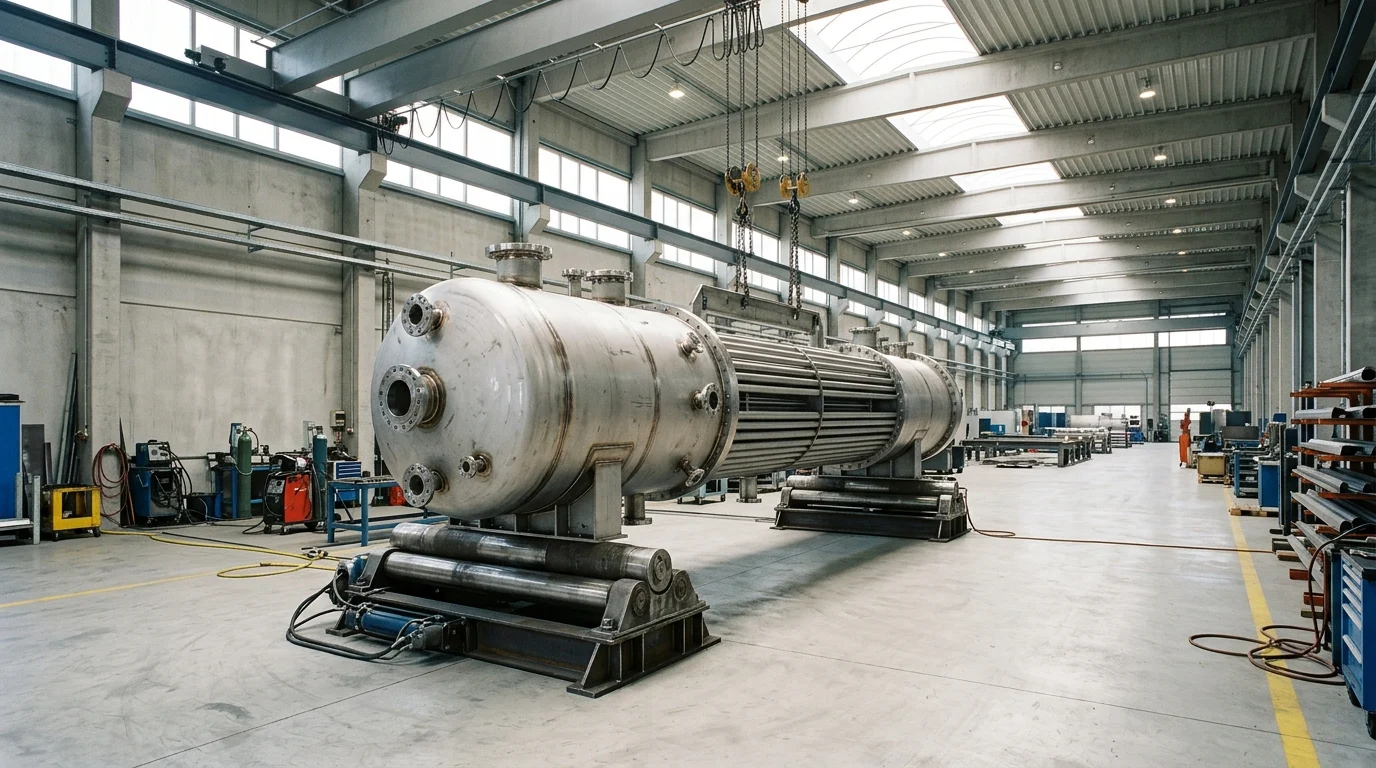
Decomposing the Workflow: The 6-Stage Hybrid Engineering Pipeline
Feeding a 2D drawing directly into a generic multimodal LLM produces hallucinated dimensions and unusable cost estimates. Real engineering automation decomposes the problem into a 6-stage hybrid pipeline where each stage uses the exact computational discipline suited for its domain:
Multimodal Ingestion & OCR
Extracts title block metadata, revisions, material callouts, and tabular notes from scanned or digital 2D drawings.
Computer Vision • OCRContour & Geometry Parsing
Reconstructs vector topological features, separates boundary contours from hatching, and identifies projection views.
Computational GeometryDimension & GD&T Association
Anchors dimensional callouts, tolerances, and surface roughness symbols to specific geometric boundaries and datum axes.
Spatial Graph AnchoringEngineering Rules & Solvers
Applies deterministic physics formulas (ASME Section VIII, API 560), material grades, and manufacturing envelopes.
Deterministic SolversPart Intelligence & Spec Matching
Classifies standard vs. custom components, matches historical catalog parts, and cross-references customer RFP specs.
Catalog ML • Domain SLMAutomated Costing & CAD Export
Generates parametric 3D CAD assemblies, E-BOMs, remnant nesting plans, and line-item RFQ cost estimates.
Parametric Cost EngineExecutive Self-Assessment: 6 Questions to Measure Real AI Maturity
Instead of counting employee chat prompts, convene your engineering and operations leadership around these six workflow benchmarks:
Has engineering become measurably faster?
Can 3D modeling, 2D fabrication drafting, and E-BOM extraction be executed in hours rather than days?
Are drawing errors caught before fabrication?
Are nozzle interference, tolerance conflicts, and BOM mismatches flagged automatically prior to shop-floor release?
Can custom RFQs be returned in hours?
Can your estimating team deliver technically validated, bottom-up costed proposals ahead of competitors?
Is remnant inventory automatically nested?
Do new CAD geometries automatically check reusable steel plate remnants before triggering fresh procurement?
Are supplier MTCs/STCs verified at intake?
Are chemical and mechanical test certificates audited automatically against ASME/ASTM limits before material acceptance?
Do spec changes propagate automatically?
When a customer modifies operating pressure or thermal duty mid-project, do 3D assemblies and shop drawings update in minutes?
Explore VM Micro's Engineering Design Automation Platform
See how VM Micro translates 2D engineering blueprints into parametric 3D CAD models, ASME calculations, and automated E-BOMs.