

Walk into almost any modern discrete manufacturing plant, automotive Tier-1 facility, or heavy engineering shop floor today, and you will see no shortage of screens. Telemetry from CNC machining centers, induction furnaces, and robotic assembly lines streams continuously into historian databases and OEE monitors.
Yet when you speak with Plant Heads and VPs of Operations, a familiar frustration emerges. Despite investments in Industrial IoT sensors, shift supervisors still spend hours every day chasing spare parts in SAP, reconciling quality hold tags, manually recalculating production schedules after line stoppages, and investigating why casting scrap spiked on the night shift.
Anatomy of a Line Bottleneck: Passive Alert vs. Closed-Loop Agentic Execution
Consider what happens when an anomaly detection model flags an elevated harmonic vibration signature on a critical CNC spindle motor. Compare the traditional fragmented human response against a closed-loop agentic workflow:
Passive Alert → Manual Coordination (4+ Hours)
Multi-Agent Orchestration (< 3 Minutes)
Four High-ROI Domains Where Manufacturing AI Delivers 90-Day Payback
Across heavy engineering, automotive component manufacturing, and metallurgical plants, four operational workflows consistently deliver measurable financial payback within a single quarter:
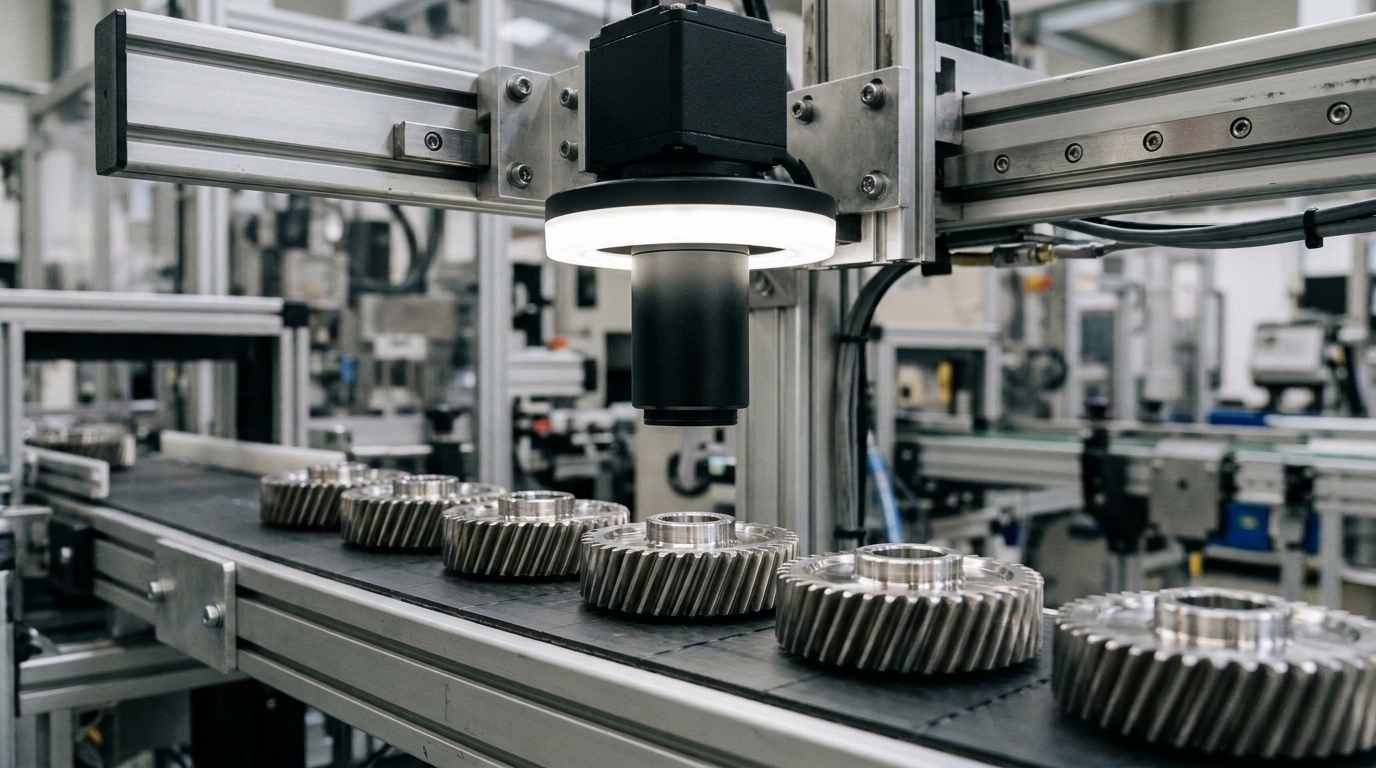
Inline Vision AI & Dimensional Metrology
Replaces sample-based manual gauging with 100% inline optical inspection for surface cracks, weld porosity, missing sub-assemblies, and dot-peen serial OCR at full line speed.
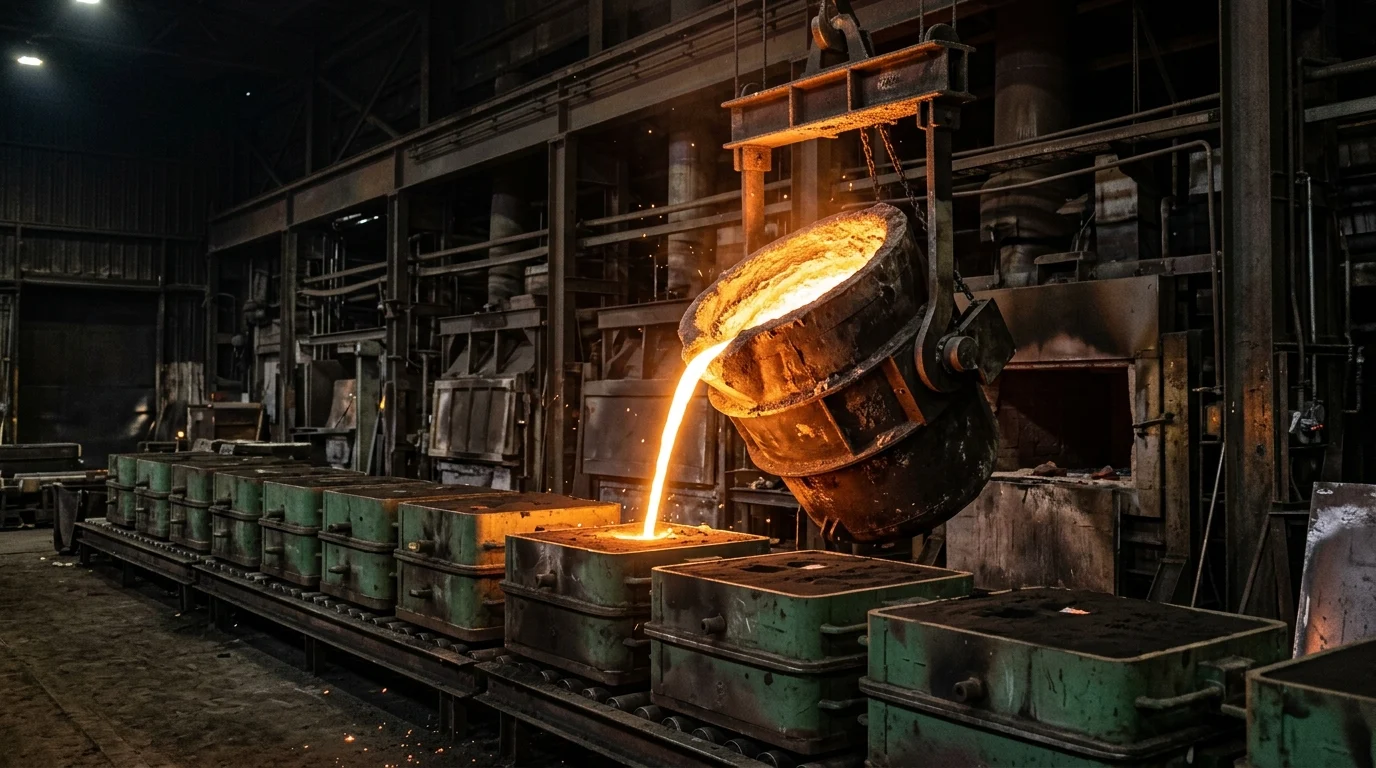
Foundry & Metallurgical Process Copilot
Connects optical emission spectrometry (OES), induction furnace power logs, sand moisture, and pouring temperatures to recommend exact ferro-alloy trim additions prior to tapping.
CAD-Driven Offcut & Remnant Nesting
Extracts part geometry directly from CAD drawings and runs 2D nesting algorithms against live remnant plate inventory so fabricators reuse offcuts before ordering new steel plates.
Automated MTC / STC Certificate Audit
Extracts heat numbers, chemical composition, and tensile strength from multi-page Mill Test Certificates in seconds, verifying compliance against ASME, ASTM, and EN 10204 3.1 standards.
Bridging Physics and Telemetry on the Shop Floor
In high-temperature metallurgy and heavy plate fabrication, generic statistical correlations are not enough. By combining deterministic thermodynamic and geometric solvers with live shop-floor telemetry, plant teams prevent casting rejections and material scrap before metal is poured or cut.
5 Diagnostic Questions for COOs and Plant Heads
- When a machine sensor predicts a failure, how many manual steps are required to schedule the repair and reserve the spare part in ERP?
- Are surface and dimensional defects caught inline in real time, or discovered hours later during end-of-line quality sampling?
- Can your design and planning teams automatically match new fabrication parts against existing steel remnants in your yard?
- How many hours do your quality engineers spend manually reading and transcribing supplier Mill Test Certificates every week?
- Can your Plant Head see the exact financial and schedule impact of a line bottleneck across MES and ERP in a single view?
Explore VM Micro's Industrial AI & Vision Inspection Platforms
Discover how VM Micro connects shop-floor OEE, optical quality inspection, offcut nesting, and foundry analytics into measurable operational impact.