
How an Engineering Manufacturer Automated Engineering Bill of Materials (E-BOM) Creation, Reduced Manual Engineering Effort, and Accelerated ERP Readiness Using Artificial Intelligence
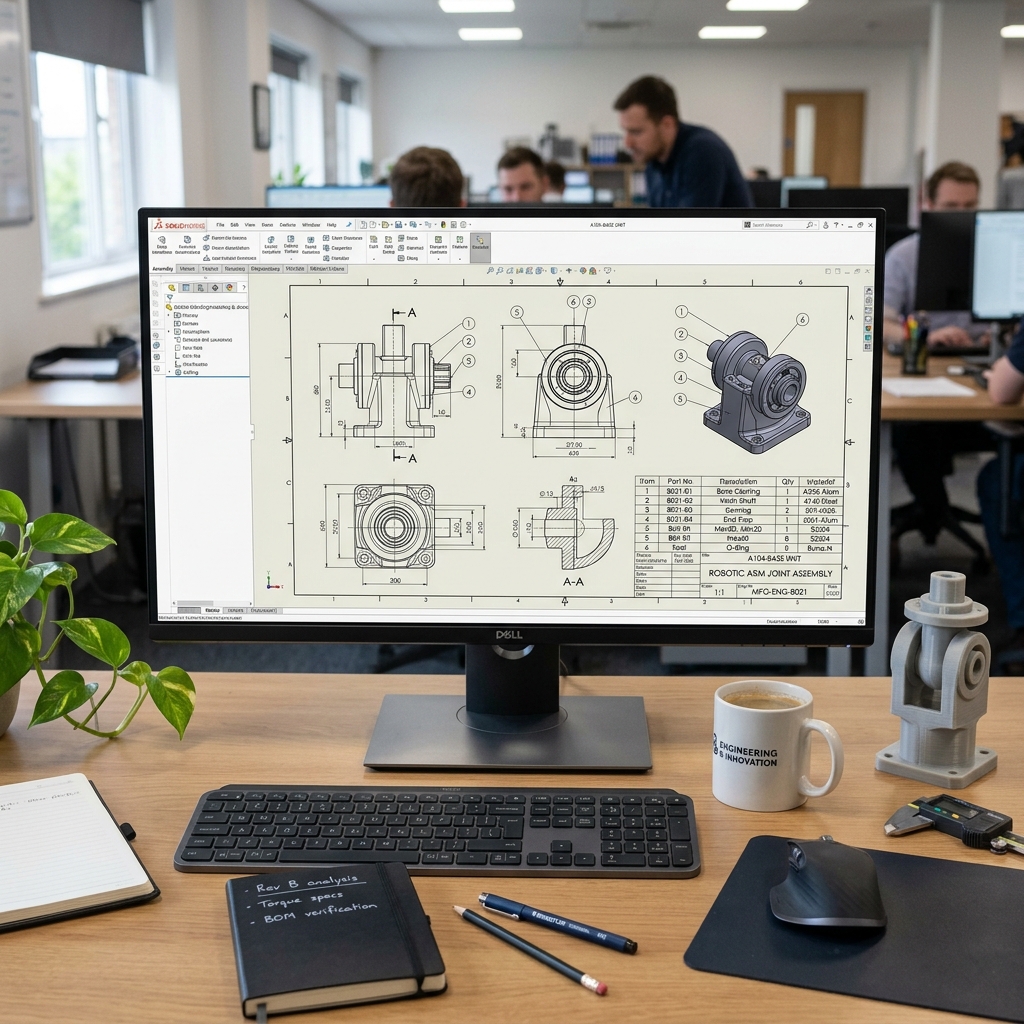
Engineering and manufacturing organizations rely on accurate Engineering Bills of Materials (E-BOMs) to drive procurement, production planning, inventory management, and ERP operations. However, creating E-BOMs remains one of the most labor-intensive engineering activities, requiring teams to manually interpret engineering drawings, identify components, extract part information, validate material specifications, and map items to ERP master data.
As engineering complexity increased and project delivery timelines became shorter, manual BOM preparation became a significant operational bottleneck. Engineers spent valuable time performing repetitive extraction and validation activities instead of focusing on design innovation.
To overcome these challenges, the organization partnered with VM Micro Analytics to develop an AI-powered E-BOM Extractor—an intelligent engineering document processing platform that automatically extracts Bill of Materials information from engineering drawings and CAD files, validates engineering data, identifies ERP material codes, and prepares production-ready E-BOMs through a controlled engineering approval workflow.
Today, engineering teams generate standardized, traceable, and ERP-ready Bills of Materials significantly faster while improving engineering accuracy and reducing manual effort.
Every engineering project generated hundreds of technical drawings, assemblies, revisions, and supporting design documents. Before production planning could begin, engineering teams had to manually inspect these documents.
Engineers spent hours extracting BOM information from multiple drawing formats (PDF, DWG, DXF).
Different projects followed different drawing standards, resulting in inconsistent BOM structures.
Manual transcription increased the risk of incorrect part numbers, quantities, specifications, and material grades.
Incorrect material identification delayed procurement and production planning activities.
Tracking changes and differences between engineering revisions required extensive manual drawing comparison.
VM Micro Analytics designed and implemented an AI-powered Engineering Bill of Materials platform that combines Document AI, CAD intelligence, OCR, engineering metadata extraction, ERP integration, and AI-assisted validation into a single engineering workflow. Rather than simply extracting text, the platform understands engineering documents and transforms them into structured, validated, production-ready E-BOMs.
Processes PDF drawings, DWG/DXF files, Excel/CSV sheets, and scanned documents, identifying title blocks, metadata, BOM tables, and callouts.
Intelligently extracts and normalizes drawing numbers, revisions, project info, assemblies, part numbers, material specs, dimensions, and quantities.
Retrieves ERP master records in real time to match grade, schedule, pressure class, and constraints, recommending high-confidence material codes.
Engineers review matches, confidence scores, and revision changes, approving the BOM before submiting to the ERP database.
Automatically compares revisions to highlight added, removed, modified, or unchanged components, ensuring full change history.
Our structured six-phase implementation methodology ensures seamless transition and rapid user alignment.
Engineering process assessment and requirement definitions
Collection of representative engineering drawings and CAD files
Development of engineering extraction models
AI-assisted metadata extraction and normalization
ERP integration and intelligent material matching validation
Engineering validation and controlled rollout with production teams
Engineering teams now generate production-ready Bills of Materials much faster by automating extraction and validation tasks.
Automated extraction and structured validation reduce manual transcription errors and improve consistency across projects.
Real-time material-code matching minimizes delays in procurement and production planning by ensuring approved BOMs are ERP-ready.
Revision comparison and change tracking allow engineers to focus only on modified components instead of reviewing complete drawings.
Every extracted item is linked back to its source drawing, revision, and ERP transaction, providing complete auditability.
By eliminating repetitive document-processing tasks, engineers can dedicate more time to design optimization and innovation.
Planned future roadmap initiatives to scale capabilities and integration.
Automating the translation of E-BOMs into production-aligned Manufacturing BOMs.
Synchronizing BOM revisions directly with Product Lifecycle Management (PLM) systems.
Extending OCR and extraction capabilities to handle global multilingual engineering callouts.
Enabling AI-guided code and specification reviews for BOM compliance.
"Creating Engineering Bills of Materials from complex engineering drawings was traditionally one of the most time-consuming activities in our engineering workflow. The AI-powered E-BOM Extractor developed by VM Micro Analytics has fundamentally transformed this process. Our engineers now receive structured, validated, ERP-ready Bills of Materials with intelligent material-code recommendations while retaining complete engineering control over approvals. The platform has significantly improved engineering productivity, data quality, and ERP readiness, enabling us to deliver projects faster and with greater confidence."— Head of Engineering & Digital Transformation Mid-Size Industrial Manufacturing Organization
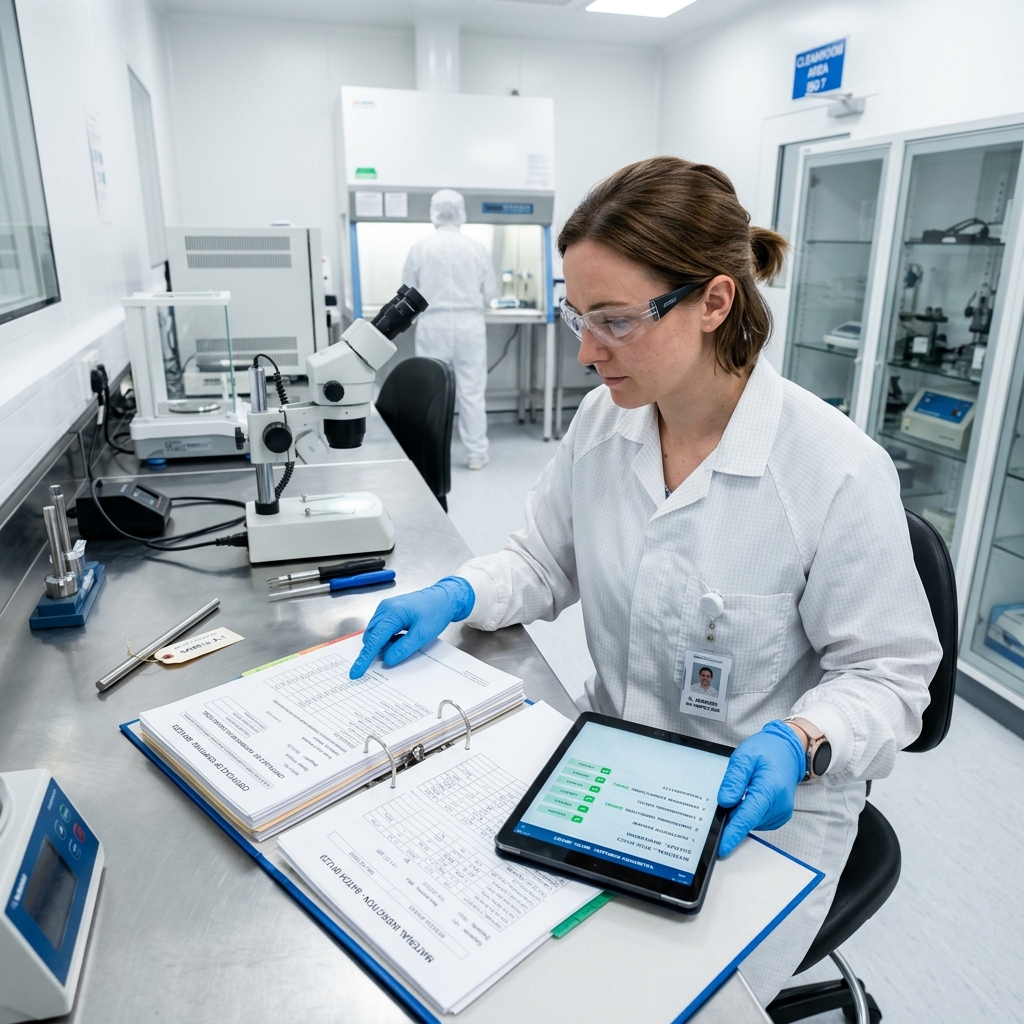
A global engineering manufacturer accelerated incoming quality inspections using an AI platform to extract parameters from Supplier Test Certificates and validate compliance with international engineering standards.
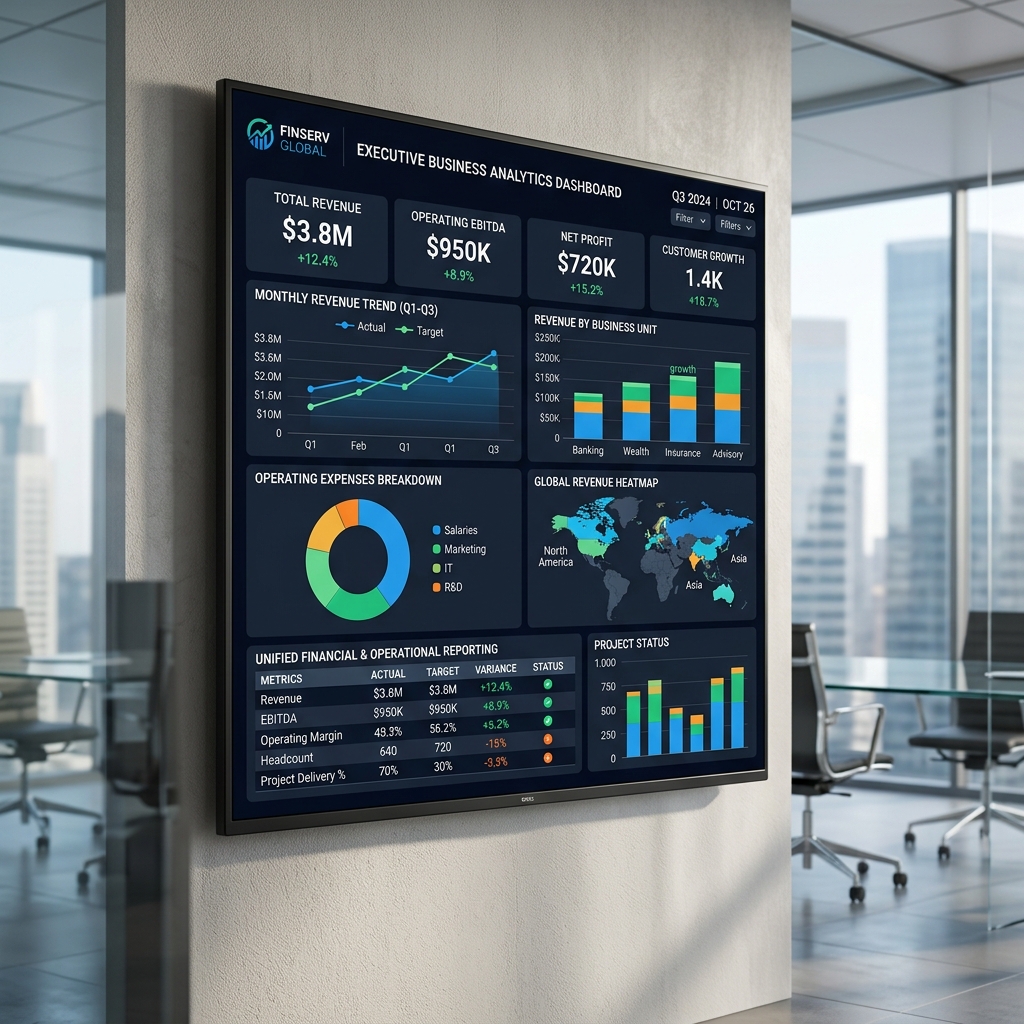
A leading manufacturer consolidated disconnected ERP, HRMS, and spreadsheets into a unified AI-powered business dashboard, providing real-time KPI monitoring and drill-down analytics for executive decision-making.
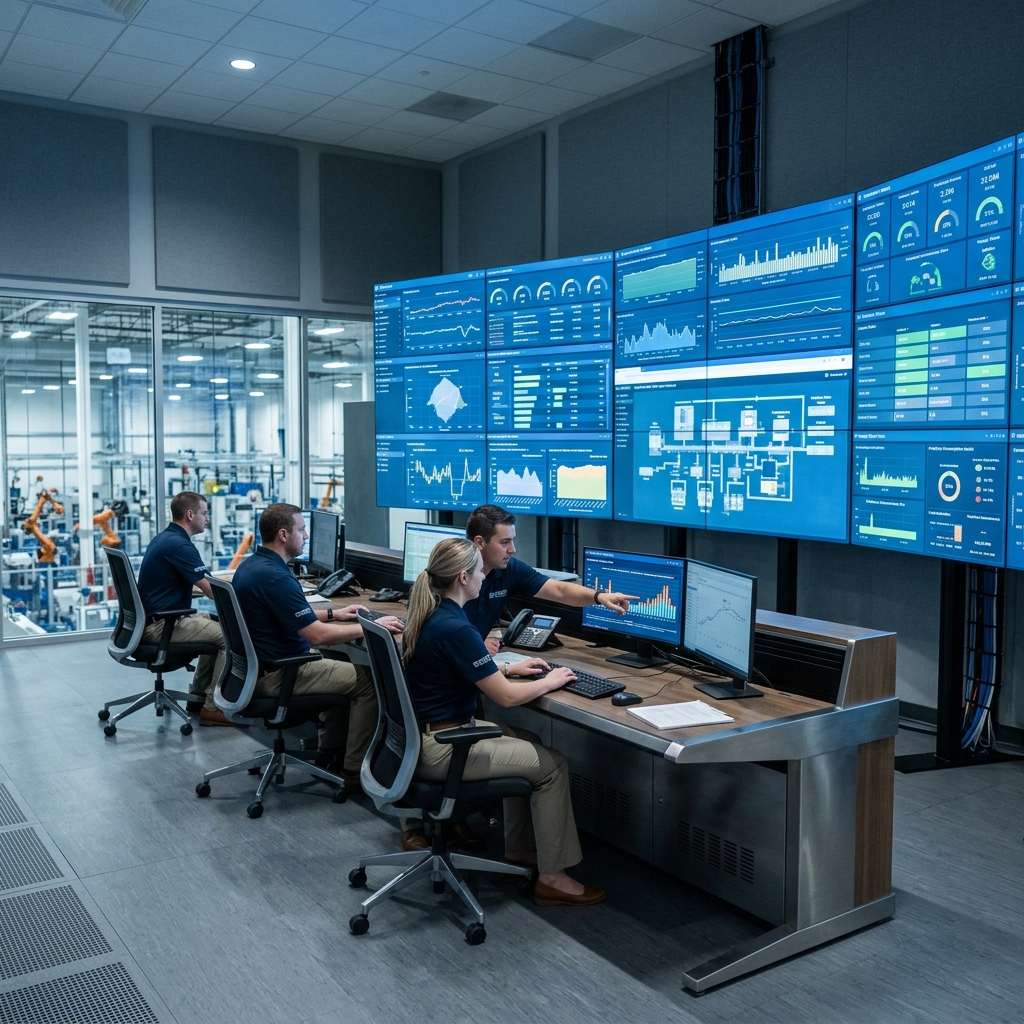
An industrial engineering manufacturer deployed an AI-driven operational intelligence platform, integrating production, maintenance, and quality data for real-time performance monitoring and proactive bottleneck identification.
Explore how VM Micro can help address complex operational, engineering, analytics, or transformation challenges with practical AI solutions.